
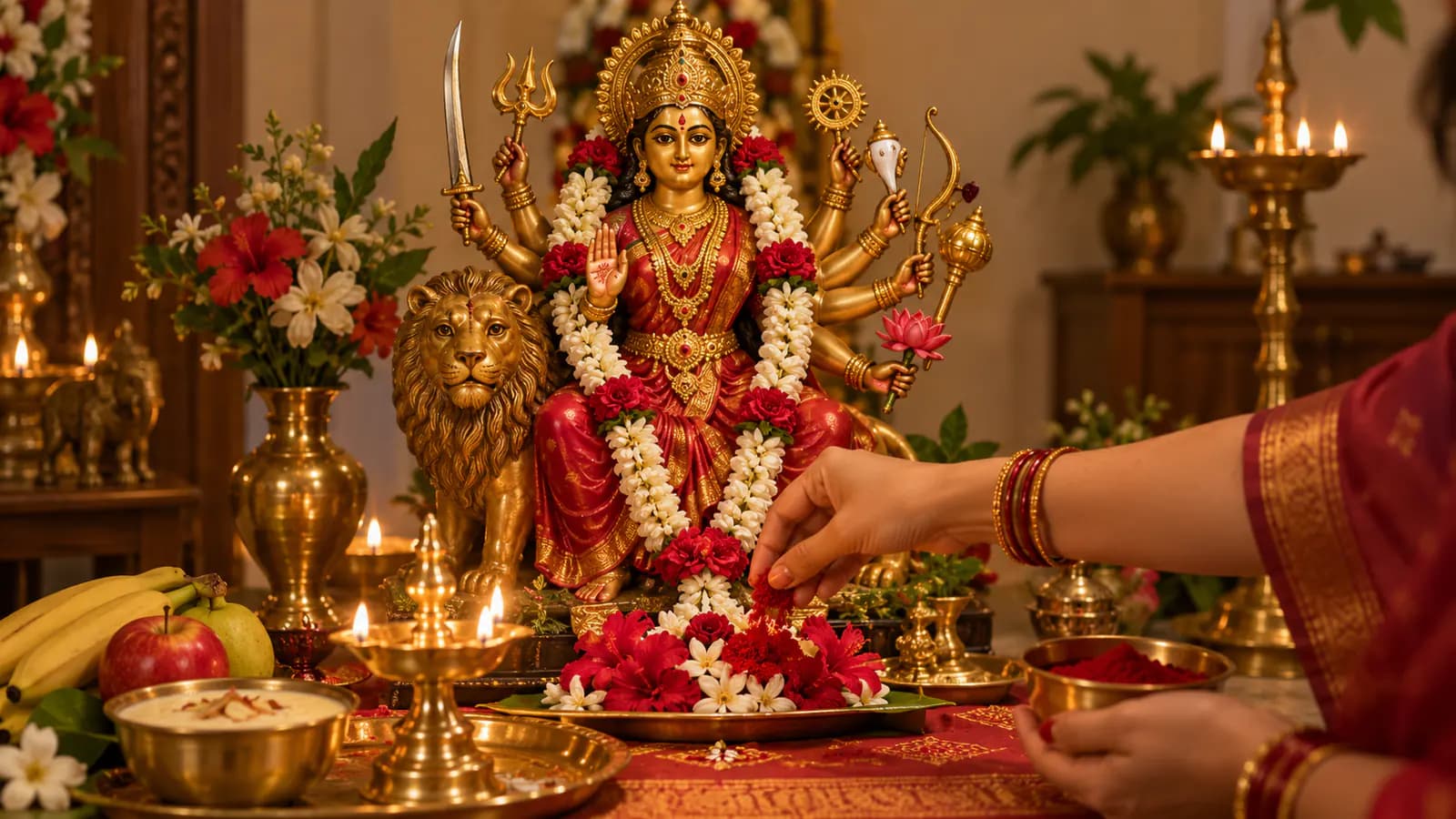
On Wednesday, 14 October 2026 (Ashwayuja Shukla Chaturthi), Goddess Kanaka Durga on Indrakeeladri in Vijayawada appears as Sri Mahachandi Devi, the fourth alankaram of the Dasara Navaratri festival. If you cannot visit the temple, you can do a simple kumkuma archana at home with the Sri Chandi Ashtottara Shatanamavali, the 108 names of Chandi. It takes about ten minutes. This guide explains who Mahachandi is, how to do the archana step by step, and which other stotras to add if you have time.
Who is Mahachandi?
In the Devi Mahatmya of the Markandeya Purana, the text read as the Durga Saptashati or Chandi Patha, the goddess who battles the asuras is most often called Chandika. Its thirteen chapters fall into three episodes: the slaying of Madhu and Kaitabha, the killing of Mahishasura, and the defeat of Shumbha and Nishumbha. Their presiding forms are Mahakali, Mahalakshmi and Mahasaraswati, and devotees see Mahachandi as the one goddess who holds all three. Durga, Chandi and Chamunda are names of the same Devi. You can read how she appeared in the story of Durga Devi's origin.
Why chant the Chandi Ashtottaram?
A full Saptashati reading runs to 700 verses, which few people can manage every day. The Chandi Ashtottara Shatanamavali gathers the same vocabulary into 108 names for archana. It opens with Om Maheshvaryai Namah and closes with Om Satyakamadayai Namah. A few names worth noticing:
- Name 20 is Durgayai and name 25 is Mahishasuraghatinyai, the slayer of Mahishasura.
- Name 49 is Chamundayai, the title she earned by killing Chanda and Munda.
- Kalaratri (11), Katyayani (18) and Skandamata (90) are Navadurga names that appear in the list.
- Name 85, Sarvamangala Mangalyayai, recalls the famous verse of the Narayani Stuti.
The list suits any of the nine nights of Navaratri, and many families make a point of chanting it on the Mahachandi day, on Durgashtami and on Mahanavami.
How to do the Chandi Ashtottara archana at home
- After a bath, clean the puja space and light a ghee lamp before the Devi's picture or idol.
- Remember Ganapati first, then make a short sankalpa with your name and gotra.
- Meditate on the Devi with this verse from the Devi Mahatmya:
Sarva mangala mangalye shive sarvartha sadhike,
sharanye tryambake gauri narayani namo'stu te. - Open the Chandi Ashtottaram page and offer a pinch of kumkuma or one flower each time you say "Namah" at the end of a name. Playing the audio or video on that page helps with pronunciation.
- After the 108 names, offer payasam or fruit as naivedyam and finish with camphor aarti.
The page also has a Telugu-script switch, larger-text buttons and a PDF if you prefer reading from print.
Stotras to add if you have more time
- Argala Stotram, read before the Saptashati, with its refrain "rupam dehi jayam dehi".
- Siddha Kunjika Stotram, regarded as a short key to the Saptashati.
- Durga Saptashloki, seven verses from the Devi Mahatmya that take about five minutes.
- Sri Chandika Stotram and Mangala Chandika Stotram.
The remaining alankarams
After Mahachandi come Lalitha Tripurasundari on 15 October, Saraswati on 16 October (Moola nakshatram), Mahalakshmi on 17 October, Durga on 18 October (Durgashtami), Mahishasuramardini on 19 October (Mahanavami) and Rajarajeshwari on 20 October (Vijayadashami). The full day-wise list with links to each day's ashtottaram is in Dasara Alankaram 2026. For the nine forms of Durga see Navadurga, and for festival dates see the Navaratri page.
Alankaram dates follow the Indrakeeladri temple programme as reported in the news. Check your local panchangam for tithi timings where you live.